
How to Fix Rusted Cast Iron Cookware
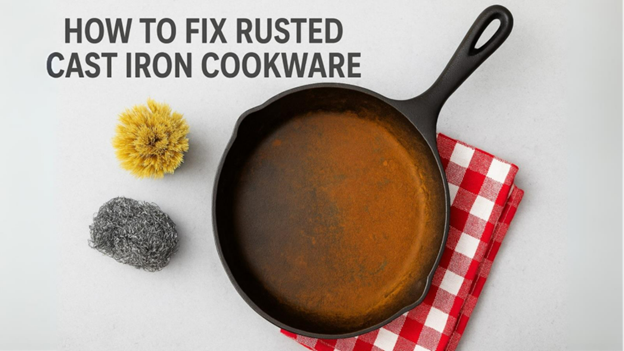
Cast iron cookware has a special place in the kitchen. Whether it’s your grandma’s decades-old skillet or a brand-new Dutch oven, these pans are loved for their durability, versatility, and unmatched ability to hold heat. Cast iron gives that perfect crust on a steak, a golden sear on vegetables, or a deep, even baked on cornbread.
But here’s the thing: cast iron also requires care. If you’ve ever noticed orange-brown patches on your pan, you’ve discovered the biggest downside to cast iron: rust. Seeing it can feel discouraging, but the good news is that rust is not the end of your pan’s life. With the right steps, you can bring cast iron back to life and keep it cooking beautifully for years.
At Mega Boutique Australia, we want your cookware to last a lifetime. So, let’s talk about why cast iron rusts, how to fix it, and how to stop it from happening again.
Why Does Cast Iron Rust?
Cast iron is incredibly strong. People have been cooking with it for centuries. But it’s also porous, which makes it vulnerable to moisture and oxygen. When water lingers on the surface, it reacts with the iron, creating rust.
Common culprits include:
- Not drying completely after washing: Even a few drops of water can trigger rust.
- Leaving it soaking in water: Cast iron should never be left to soak, not even overnight.
- Storing in a humid environment: A damp cupboard or kitchen with poor airflow can cause issues.
- Neglecting seasoning: Without that protective oil layer, cast iron is exposed and unprotected.
The good news? Rust is 100% reversible. A patchy skillet or even a pan that looks completely orange can usually be restored with some simple TLC.
How to Fix Rusted Cast Iron
Restoring cast iron is easier than you think. All it takes is four main steps: scrub, wash, season, and protect. Let’s break it down.
Step 1: Scrub Away the Rust
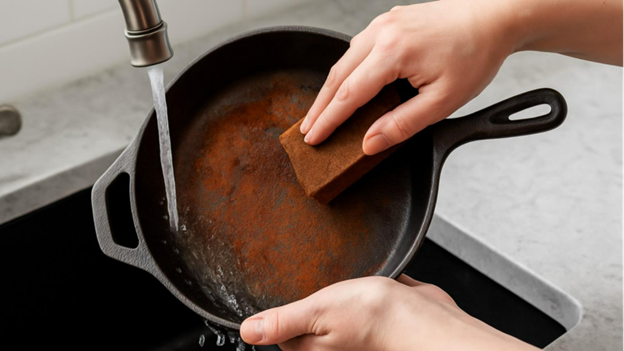
- Grab a steel wool pad, cast iron brush, or non-metallic scrubber and go to work on the rust.
- Run the pan under warm water while scrubbing, and don’t be afraid to put in some elbow grease.
- For light rust: A simple scrub with a stiff brush may be enough.
- For heavy rust: Use coarse steel wool or even a rust eraser designed for cast iron.
Natural method: Mix coarse salt and water to make a paste, then scrub with a cloth. The salt acts as a gentle abrasive without scratching the surface.
Don’t be alarmed if your pan looks dull or patchy after this step. That’s just the rust being removed, and it means you’re on the right track.
Step 2: Wash and Dry Thoroughly
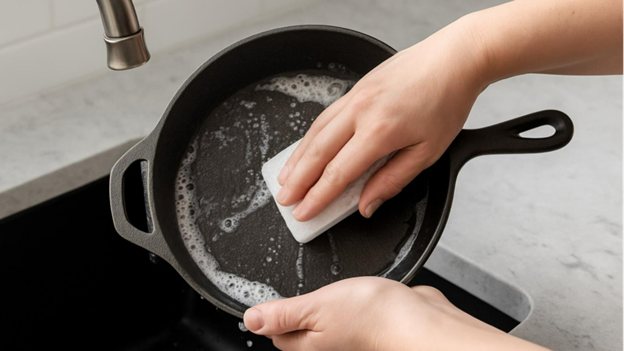
- Normally, cast iron care avoids soap. But this is the one time you can use a small amount of mild dish soap to wash off any residue.
- Rinse with warm water.
- Immediately dry the pan with a towel.
- Then place it on a warm stovetop or in a low oven for a few minutes to remove every drop of moisture.
Important: Never air-dry cast iron. That’s basically an invitation for rust to return.
Step 3: Reseason Your Cast Iron
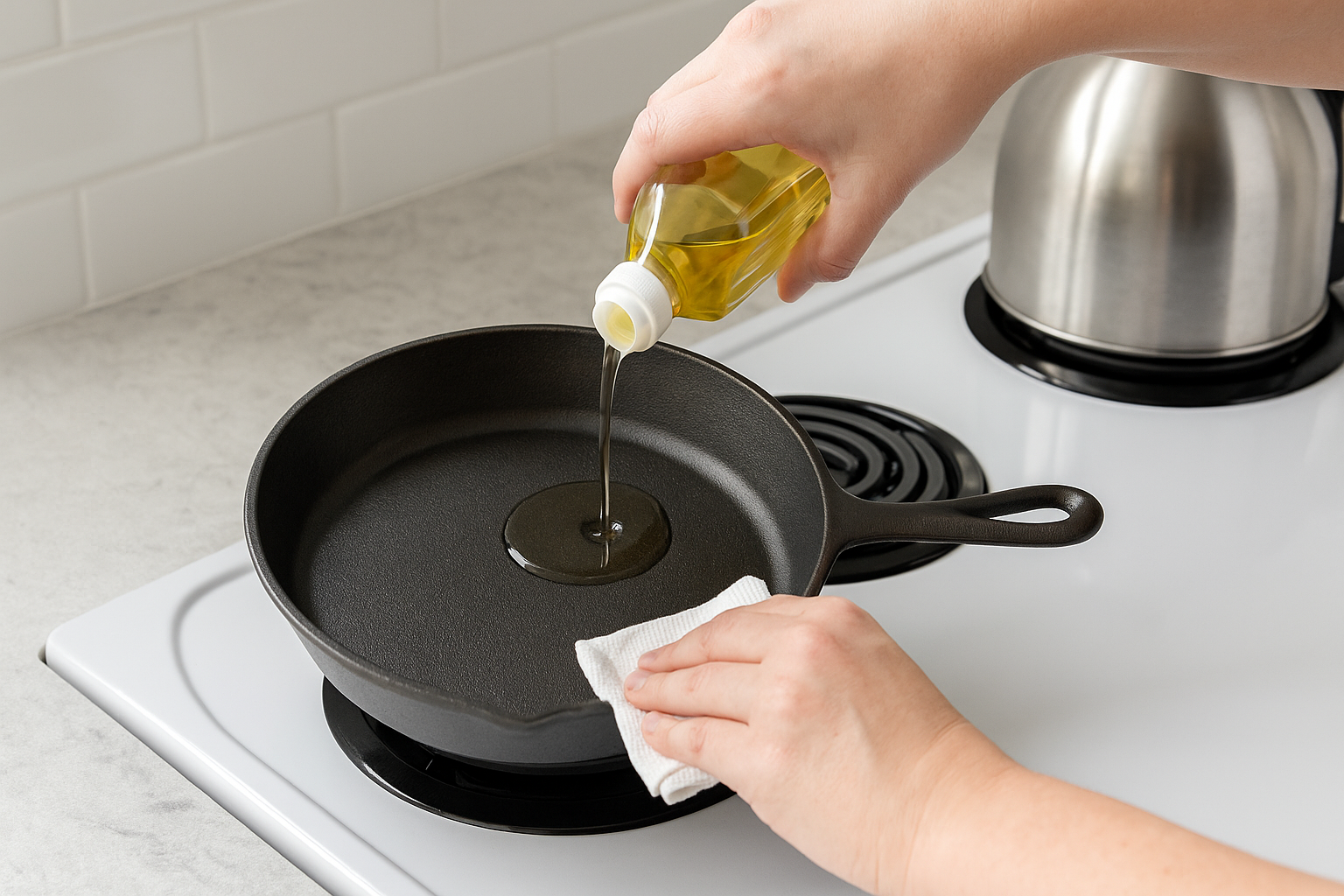
Seasoning is what makes cast iron so special. It’s a thin layer of polymerised oil baked onto the surface that protects the metal, prevents sticking, and gives food that unmistakable cast iron flavour.
Here’s how to reseason after rust removal:
- Rub a thin layer of oil (vegetable, canola, grapeseed, or flaxseed oil work best) over the entire surface (inside, outside, and handle).
- Wipe off excess oil with a paper towel or cloth until the pan looks almost dry. Too much oil can make it sticky.
- Place the pan upside down in an oven preheated to 200–220°C (400–430°F). Put a baking sheet or foil underneath to catch drips.
- Bake for 1 hour.
- Turn off the oven and let the pan cool inside.
Pro tip: Repeat the oiling and baking cycle 2–3 times for the strongest nonstick layer.
Step 4: Prevent Rust from Returning
Restoring cast iron is only half the job. Keeping it in good shape is where the real magic happens. Here’s how:
- Always dry after washing: Towel + stovetop heat = your best friend.
- Lightly oil before storing: A quick wipe of oil keeps the surface protected.
- Never soak in water: Even for a few hours.
- Store in a dry place: If your kitchen is humid, slip a paper towel inside the pan to absorb moisture.
- Use it often: The more you cook with cast iron, the stronger the seasoning gets.
- Think of cast iron like a plant. A little ongoing care keeps it thriving.
FAQs About Rusty Cast Iron
1. Can I use vinegar to remove rust?
Yes, but with caution. A 50/50 vinegar and water soak can loosen heavy rust but never leave cast iron in vinegar for more than a few hours. It can damage the metal.
2. Is a little rust dangerous?
No. Small rust spots aren’t harmful, but they can affect flavour and cooking. Best to fix them as soon as you notice.
3. What if my cast iron is completely covered in rust?
Don’t panic! Even pans that look beyond saving can often be restored. You may just need more scrubbing, or in extreme cases, a professional sandblasting service.
4. How often should I reseason my cast iron?
Light seasoning maintenance (a quick oil rub) can be done after every use. A full oven-seasoning is usually only needed a few times a year, or after major rust removal.
Final Thoughts
Premium cast iron cookware like Scanpan Black Iron Carbon and Lodge Cast Iron, available at Mega Boutique, is designed to last for generations. Yes, rust happens, but it’s far from the end.
With a scrub, thorough drying, and a good seasoning cycle, you can restore almost any rusted cast iron piece and keep it going strong for decades. And the more you cook with it, the better it gets.
So, the next time you pull out a pan and see a patch of rust, don’t worry! Just follow these steps, and you’ll be back to sizzling steaks and bubbling casseroles in no time.
At Mega Boutique Australia, we’re here to help you choose, use, and care for your cookware so that every meal feels special. Explore our full range of cast iron cookware online and bring new life to your kitchen classics.